
HCL Technologies remains under pressure after missing Q4 expectations and issuing cautious FY27 guidance. Analysts highlight weak margins, soft demand, and muted growth outlook.

Indian benchmark equity indices, Sensex and Nifty, saw gains in early trade, driven by strong performance in banking shares and positive sentiment from Asian markets, alongside optimism surrounding the ongoing US-China Summit.

Infosys has confirmed that Lax Gopisetty, chief of its subsidiary Infosys Public Services, is unreachable following devastating floods in Nepal. Gopisetty was visiting the region personally, and Infosys is working with agencies and his family to ensure his safety. The Ministry of External Affairs also reported hundreds of Indians missing or stranded due to the floods, with India offering assistance to Nepal.
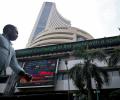
Indian benchmark indices, Sensex and Nifty, saw early gains, primarily driven by IT stocks, amidst expectations of a less aggressive monetary policy from the US Federal Reserve following softer inflation data. Global market trends and upcoming Q1 results are also influencing investor sentiment. Track Sensex, Nifty on july 16.

Indian benchmark equity indices, Sensex and Nifty, rebounded in early trade after a three-day slide, driven by strong buying in blue-chip bank stocks and a firm trend in global markets, supported by easing US bond yields and record foreign-currency deposit inflows.

The Nifty IT index has been one of the worst sectoral performers in calendar year 2026, losing nearly 29 per cent till date compared to the 8 per cent dip in the Nifty 50 index.

Indian benchmark indices, Sensex and Nifty, experienced a significant downturn, with Sensex tanking 778 points and Nifty closing at a five-month low, driven by surging crude oil prices, geopolitical tensions, and fears of further interest rate hikes by major central banks.

Indian benchmark indices Sensex and Nifty recorded sharp gains, rising over 1 per cent, driven by strong performances in IT stocks, HDFC Bank, and renewed foreign fund inflows, despite mixed global cues and elevated crude oil prices.

Sensex gains over 400 points while Nifty trades above 23,800 amid strong IT sector buying.

Indian benchmark equity indices, Sensex and Nifty, rebounded in early trade after two days of losses, driven by strong buying in blue-chip IT stocks and a rally in global markets.

Indian benchmark indices Sensex and Nifty saw gains in early trade, driven by a decline in crude oil prices due to easing geopolitical tensions in West Asia and strong buying interest in the IT sector.

Indian benchmark indices, Sensex and Nifty, experienced significant declines, with the Sensex falling 493 points and the Nifty dropping for the sixth consecutive day, primarily due to elevated crude oil prices reaching USD 91 per barrel and diminishing hopes for a diplomatic resolution in West Asia.
Indian stock market benchmark indices Sensex and Nifty closed nearly one per cent higher, extending their winning streak for a second day. This rally was driven by softening crude oil prices, positive geopolitical developments, and significant buying in blue-chip IT stocks, despite a broader global tech sell-off.

Indian benchmark indices, Sensex and Nifty, opened in positive territory, primarily driven by a strong performance in IT stocks, sustained foreign fund inflows, and a dip in global crude oil prices, despite a hawkish stance from the US Federal Reserve. Track Sensex, Nifty on July 30.

Indian benchmark indices, the BSE Sensex and NSE Nifty, snapped a four-day losing streak, with the Sensex climbing 382 points, primarily driven by a strong rally in IT sector shares. Major IT firms like TCS, Infosys, and HCL Tech saw significant gains, contributing to the market's recovery.

In the next 36 months nearly 25 to 40 per cent of jobs will be under threat from AI and job losses are inevitable.

Indian benchmark indices, Sensex and Nifty, recorded their fifth consecutive day of losses, driven by investor caution over rising oil prices due to West Asia tensions and renewed concerns regarding US trade tariffs.

Indian IT stocks experienced a significant downturn following OpenAI's acquisition of consulting firm Tomoro, intensifying fears that global AI companies are encroaching on traditional IT service models through end-to-end consulting and implementation services.

Shareholder payouts by India Inc, including dividends and buybacks, increased by 2.2 per cent year-on-year in FY26 to $5.06 trillion, but this growth lagged the 18.8 per cent rise in reported net profit for the third consecutive year, leading to the lowest dividend payout ratio in 12 years.
Indian benchmark indices, Sensex and Nifty, experienced a significant drop of over 1 per cent, driven by a bearish trend in global markets, weakness in HDFC Bank and IT firms, and fresh foreign fund outflows.

Indian equities on Dalal Street saw volatility as global market trends and fresh tariff concerns linked to Donald Trump impacted investor sentiment. Track Sensex, Nifty50 movement and key market drivers for Feb 24, 2026.
Equity benchmark indices Sensex and Nifty experienced a significant decline, primarily driven by a selloff in IT stocks due to concerns about AI disruption and renewed worries over global trade.

Indian IT service providers face heightened competition from AI-native firms in the next three years, potentially eroding their revenue base unless they remain competitive and protect recurring businesses, according to a report by S&P Global Ratings.

Indian stock markets are set to be influenced by ongoing developments in the US-Iran conflict, fluctuations in crude oil prices, and the latest quarterly earnings reports from major corporates, with foreign investor activity also playing a crucial role.
Indian benchmark indices, Sensex and Nifty, extended their rally for the fourth consecutive day, driven by a significant drop in crude oil prices and strong performance from IT firms, despite mixed global cues.
IT major Tech Mahindra reported a 28.4 per cent increase in consolidated net profit for the June quarter, reaching Rs 1,465 crore, driven by broad-based growth across manufacturing and financial services, and expressed confidence in a positive demand environment for the rest of the year.
Indian stock markets recovered from early losses to close higher, driven by value buying in IT and banking shares and a rebound in the rupee.

The time is up for the over three-decades-old business model with the advent of artificial intelligence, HCL Technologies' chief executive C Vijayakumar said on Monday. Speaking at industry lobby grouping Nasscom's annual NTLF event in Mumbai, Vijayakumar said companies need to be "paranoid", given the wide-ranging impact of AI and stressed that this attitude will help them to be relevant and grow. "I strongly believe that the business model is ripe for disruption.
Indian stock markets saw a significant rebound, with the Sensex jumping nearly 790 points, primarily fuelled by strong buying interest in telecom, pharma, and private banking shares, despite a volatile trading session and a weakening rupee.

Tech Mahindra, HCL Tech, State Bank of India, UltraTech Cement and HDFC Bank were also among the gainers. In contrast, Eternal, Asian Paints, Bharat Electronics, Sun Pharma and Maruti were among the laggards.

The selloff in domestic information technology stocks intensified on Friday, with the Nifty IT index sliding as much as 5.2 per cent during the session before paring losses to close 1.44 per cent lower.
Indian benchmark indices, Sensex and Nifty, closed lower, primarily due to a sharp sell-off in IT stocks, a fresh surge in crude oil prices, and sustained outflows from foreign institutional investors. The Sensex dropped over 300 points, while the Nifty declined by 77.95 points.

After a sharp correction over the last few months, analysts seem to be turning cautiously optimistic on the information technology (IT) sector and suggest there could be trading opportunities in select counters despite revenue and growth concerns that still plague the sector. "IT stocks valuations have corrected 17 per cent-49 per cent and stock prices have corrected 9 - 42 per cent since mid-December 2021. Nifty IT index valuation has corrected by 27 per cent and price by 21 per cent. "About two quarters ago, we made a case that valuation drivers have peaked.
Benchmark equity indices Sensex and Nifty extended their gains for the third straight session on Wednesday, driven by last-hour buying in bank, metal, and FMCG shares.

Infosys had bid at 600 pence a share for the UK company. Infosys will get the one per cent inducement fee that Axon has to pay to the party unable to close the deal.
With India's two leading IT outsourcing companies, Infosys and HCL Technologies, vying to acquire the UK-based consulting firm Axon, SAP implementation is back in focus.
Indian equity benchmark indices Sensex and Nifty experienced a significant tumble in early trade, with the Sensex tanking nearly 700 points, driven by uncertainty surrounding US-Iran negotiations, a fresh spike in crude oil prices, and persistent foreign fund outflows.

India's $280-billion IT industry heads into 2026, balancing visa-related headwinds and global trade uncertainty against its biggest-ever push into artificial intelligence and the rapid expansion of global capability centres (GCCs). Heightened scrutiny of the US H-1B visa programme - including a proposed $100,000 fee for new visas and concerns over a potential 25 per cent outsourcing tax - has complicated cross-border delivery for Indian firms, even as companies accelerate efforts to reduce reliance on onsite staffing.

The 15-year agreement will see Infosys develop a next-generation, data-driven workforce management platform to replace the existing electronic staff record (ESR) system, which annually manages a 55 billion payroll for 1.9 million NHS employees.

The combined market capitalisation of the country's top five IT firms that are part of the BSE Sensex is down 24 per cent since January and their valuation has slipped to lowest levels in the past five years.
